Membrane Waterproofing Services in Pakistan
A waterproof membrane is a continuous barrier that stops water from entering your roof, basement, bathroom or tank. Done right, it is the most reliable way to keep a building dry for many years. Waterproofing Hawks installs sheet and liquid membranes, from torch-on bitumen to polyurethane, PVC, TPO, EPDM and HDPE, for homes, commercial buildings and industrial sites across Pakistan.
- Free Inspection
- Written Warranty
- Trained Team

We find the real cause
On every project
Request a Free Quote
Share a few details and our team will contact you shortly to arrange a free inspection.
Request a Free Inspection
What is membrane waterproofing?
Membrane waterproofing means covering a surface with a thin, continuous layer that water cannot pass through. Unlike a coat of paint or a layer of cement, a membrane is designed to stay watertight even when the surface underneath cracks or moves slightly. It covers the whole area without gaps, turns up walls and parapets, and is sealed around every pipe, drain and edge.
There are two main families of membranes. Sheet membranes come in rolls and are laid, overlapped and bonded on site. Examples include torch-on APP and SBS bitumen sheets, self-adhesive membranes, PVC, TPO, EPDM and HDPE. Liquid applied membranes are brushed, rolled or sprayed on and cure into a seamless rubber-like skin. Examples include polyurethane, acrylic, cementitious and polyurea systems.
Why membranes work better than traditional methods
Traditional Pakistani roofing used mud, brick tiles and lime or cement layers to keep water out. These materials absorb water and crack with heat. Modern membranes stay flexible, do not absorb water and can bridge cracks, which is why they last far longer in Pakistan’s mix of extreme heat and heavy monsoon rain.
Types of waterproof membranes we install
We install all major membrane systems and recommend the one that fits your building, budget and use.
Bituminous membranes
Thick sheets made from modified bitumen, reinforced with polyester or glass fibre. Very tough and widely used on Pakistani roofs. See bituminous membrane, APP and SBS installation.
Torch-on membranes
Bitumen sheets bonded by heating the underside with a gas torch. Strong bond and long life. See torch-on membrane waterproofing.
Self-adhesive membranes
Peel-and-stick sheets with no flame, ideal for sites where torching is unsafe. See self-adhesive membrane.
Liquid membranes
Seamless coatings for complex roofs, bathrooms and terraces. See liquid applied, PU, acrylic and cementitious membranes.
Single-ply membranes
Lightweight plastic and rubber sheets for large commercial and industrial roofs. See PVC, TPO and EPDM.
HDPE membranes
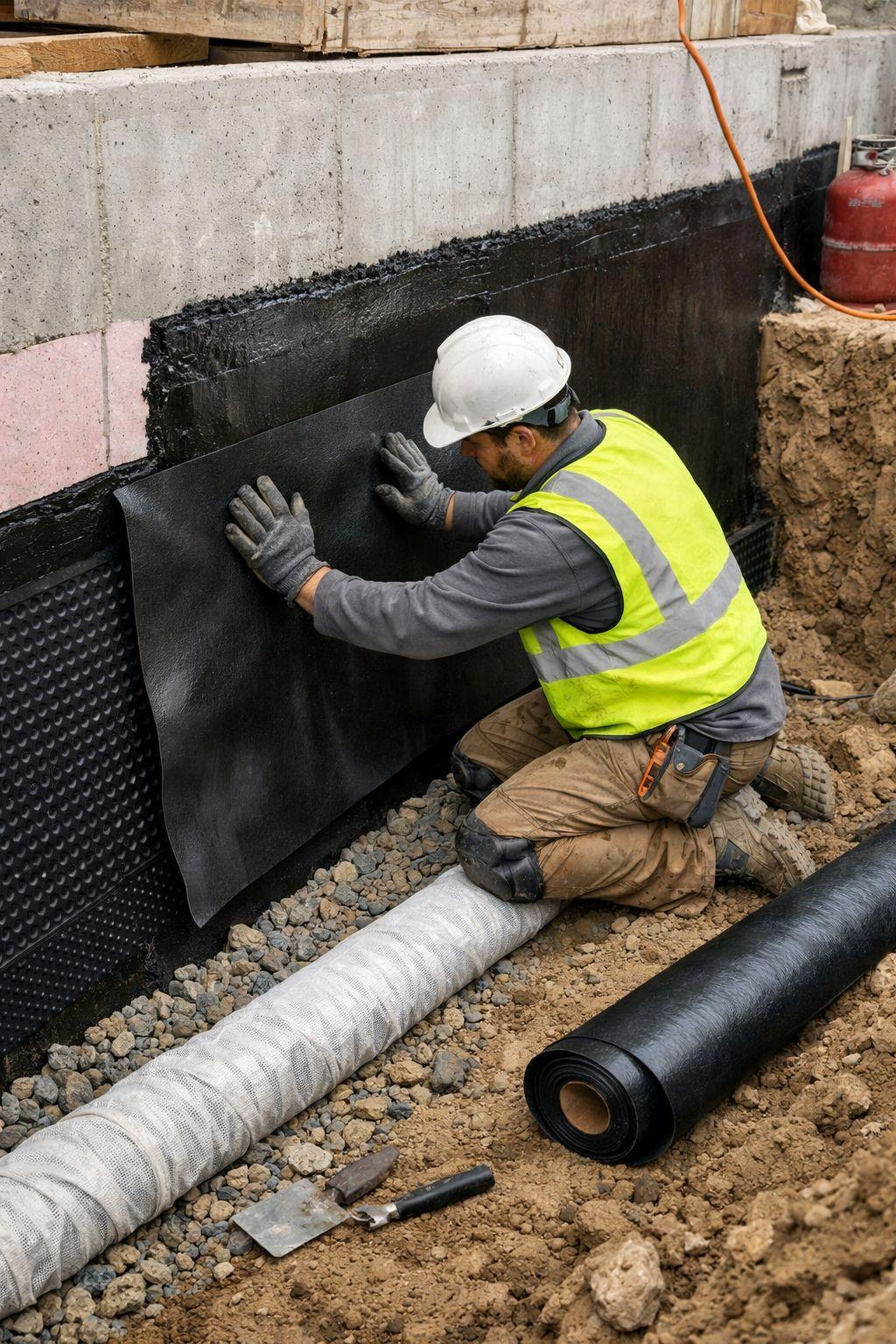
Tough sheets for basements, foundations and below-ground structures. See HDPE membrane waterproofing.
Why homeowners rely on us
Honest advice, quality materials and clean work — on every single project.
Quality Service
We deliver reliable waterproofing solutions for long-lasting protection.
Skilled Team
Our team focuses on effective membrane waterproofing work and protection.
Quick Response
We respond promptly to your membrane waterproofing service inquiries.
Fair Pricing
We help customers explore suitable waterproofing options within budgets.
Leak Prevention
Our solutions help reduce water penetration and moisture damage.
Roof Protection
We help protect residential and commercial roofs from leakage.
| Membrane | Best for | Strengths | Points to note |
|---|---|---|---|
| APP/SBS torch-on | Flat roofs, terraces | Thick, tough, long life | Needs protection from UV and skilled torching |
| Self-adhesive | Sites where flame is unsafe | No heat, clean install | Needs a very clean, dry surface |
| Polyurethane liquid | Complex roofs, terraces, bathrooms | Seamless, flexible, crack bridging | Needs correct thickness and dry surface |
| Acrylic | Exposed roofs, walls | Reflects heat, cost-effective | Needs recoating every few years |
| Cementitious | Bathrooms, tanks, basements | Bonds to damp concrete, potable grades | Less flexible than PU |
| PVC / TPO | Large commercial roofs | Light, heat-welded seams, reflective | Specialist installation |
| EPDM | Roofs with movement | Very elastic, UV stable | Seams need careful bonding |
| HDPE | Basements, foundations | Strong against groundwater and roots | Installed before backfill |
Where we use membrane waterproofing
Roofs
The most common use. See roof membrane waterproofing and industrial roof membrane installation.
Terraces and balconies
Walkable areas need protected or tough exposed membranes. See terrace and balcony membranes.
Basements and foundations
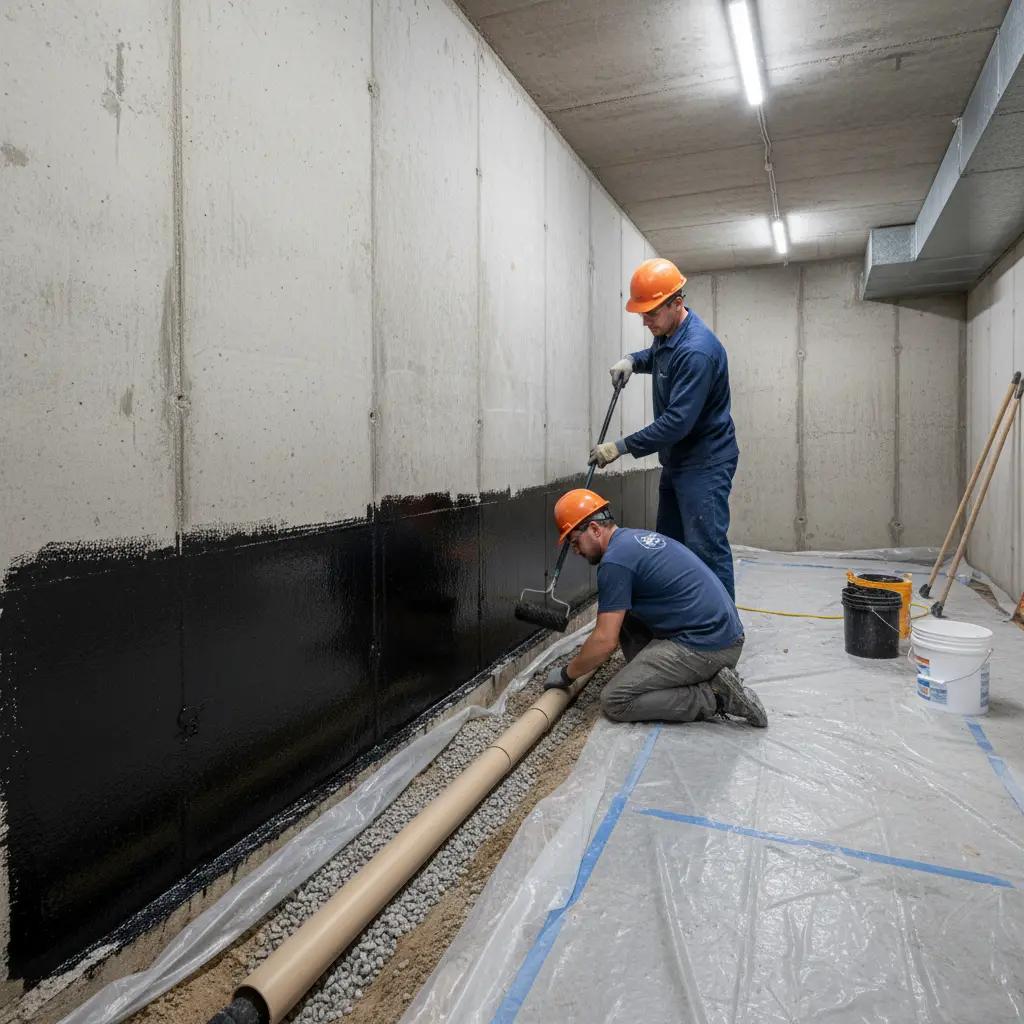
Below-ground walls and floors face groundwater pressure. See basement and foundation membranes.
Bathrooms
Membranes under tiles stop leaks into rooms below. See bathroom membrane waterproofing.
Water tanks and pools
Potable and pool-grade membranes. See water tank and swimming pool membranes.
Commercial buildings
Plazas, hospitals, schools and offices. See commercial building membrane waterproofing.
Leaking roof or a hot top floor? Let's fix it.
Book a free inspection today. Our expert will visit, find the cause and suggest the right solution.
Sheet membrane or liquid membrane: which should you choose?
This is the first decision in most membrane projects, and the right answer depends on the shape of the surface, how it will be used and the budget.
Choose a sheet membrane when
- The roof is large, flat and simple, with few pipes and equipment bases.
- You want a thick, factory-made layer with a consistent thickness everywhere.
- The membrane will be protected by screed, tiles or a reflective coat.
- Heavy monsoon rain and ponding are expected.
Torch-on bitumen sheets are the most common choice for Pakistani houses because they are tough, widely available and reliable when installed well. On large factory and warehouse roofs, PVC and TPO sheets are increasingly popular because they are light and reflective.
Choose a liquid membrane when
- The surface has many pipes, corners, tank bases and level changes.
- You want a seamless finish with no overlaps.
- The area is a bathroom, balcony or small terrace.
- The membrane will be exposed and needs a UV-stable, reflective top coat.
Liquid PU and acrylic membranes follow every shape and wrap around details easily. Their weak point is thickness control, so we measure wet film thickness during application to make sure every area receives the specified amount.
Combining both
On many roofs we use a sheet membrane on the open areas and a compatible liquid membrane around complex details such as pipe clusters and tank stands. This gives the strength of sheets with the flexibility of liquids where it is needed most.
Why membranes fail and how we prevent it
When we inspect failed membranes, the cause is rarely the material itself. It is almost always the installation.
Poor surface preparation
Membranes laid over dust, loose screed or wet surfaces do not bond. They blister in the heat and peel at the edges. We clean, repair and dry the surface before starting.
Weak overlaps
Sheet membranes need overlaps of the right width, fully bonded. Narrow or cold overlaps open within a season. We check every seam.
Untreated details
Drains, pipe penetrations, parapet corners and tank bases account for most leaks. We reinforce each detail before laying the main membrane.
No upturn at walls
Membranes stopped at the floor edge let water run behind them. We turn them up parapets and walls, usually 150 to 300 mm, and terminate them securely.
Exposed bitumen
Bitumen left bare under Pakistani sun becomes brittle. We protect it with a reflective coat, screed or tiles.
Damage after installation
Later work such as dish antennas, solar frames and new pipes often punctures membranes. We advise clients to call us before drilling, and we offer repair services when it happens.
What Our Customers Say.
We don't just fix leaks — we build trust. Real reviews from homeowners and businesses across Pakistan, straight from our Google Business profile.
Loading reviews from Google…
Posted on Google
 Tayyaba Mughal
Trustindex verifies that the original source of the review is Google.
Bestest waterproofing services of roofPosted on Google Husnain ButtBest waterproofing services in gulbergPosted on Google
 Zoya WasimBest roof treatmentPosted on Google
 manzoor ahmadMera ghr dha 5 hy Bht Acha kam koa hawks team ny m apny friends ko or sb jannay walon ko hawks waterproofing recommend krn ga thanks hawks teamPosted on Google
 syed rameez ashfaqExcellent servicesPosted on Google
 Abdullah KungBht achi services Hn product excellent highly recommended m ny water and heat proofing ka kam krwaya fiber sheet k sath bht Acha result hy abi spa page issue b resolve ho Gia or roof b cool hyPosted on Google
 Muhammad HamzaWork they do it really worths💯 Best Quality💯Posted on Google
 HAMZA MALIKBest heat proofing m ny roof py krwai room ka temperature normal ho gia
What affects the cost of membrane waterproofing
- Area including parapet upturns and details.
- System: acrylic and cementitious are lower cost; torch-on, PU, PVC and TPO cost more but suit different needs.
- Removal of old layers such as mud, brick tiles or failed membranes.
- Repairs and slope correction before installation.
- Protection layer: reflective coat, screed or tiles.
- Access and height of the building.
Your written quote breaks down each item, the number of layers or thickness, and the warranty period.
1. Survey and system selection
We inspect the surface, check slopes, drains, cracks and moisture, and recommend the right membrane for the use and budget.
2. Surface preparation
Old failed coatings, loose screed and debris are removed. The surface is cleaned, cracks are repaired and slopes corrected so water drains to outlets.
3. Detailing
Fillets are formed at wall junctions. Drains, pipes, parapets and expansion joints are pre-treated with reinforcing strips, because these details are where most membranes fail.
4. Primer
The correct primer is applied for the chosen membrane, improving bond and sealing dust.
5. Membrane application
Sheets are laid with proper overlaps of around 100 mm and sealed by torch, adhesive or heat welding. Liquid membranes are applied in multiple coats to the specified thickness, with fabric reinforcement where needed.
6. Water test
Where practical, the area is flood tested for 24 to 48 hours.
7. Protection
A reflective top coat, protection screed, tiles or protection board is added depending on the system and use.
Four simple steps to a dry home
A clear, hassle-free process from your first call to the final handover.
Get in Touch
Call, WhatsApp or fill the form and tell us about the problem.
Free Inspection
Our expert visits your site and finds the exact source of the issue.
Clear Quotation
You receive a detailed quote with materials, timeline and warranty.
Work & Handover
We complete the treatment on time and hand over your warranty.
Why membrane choice matters in Pakistan's climate
Pakistan’s climate is hard on waterproofing. In Multan, Jacobabad, Sukkur and Bahawalpur roof surfaces bake in extreme summer heat, which ages bitumen and weak coatings quickly. In Lahore, Islamabad and Sialkot the monsoon brings heavy rain for weeks. Karachi’s salty, humid air attacks exposed materials, and northern areas like Gilgit, Skardu and Murree face snow and freezing nights.
For hot areas we favour reflective, UV-stable membranes or protected bitumen systems with a heat-reflective coat. For heavy-rain areas, thick torch-on or PU systems with excellent detailing at drains work best. For coastal areas, UV and salt-resistant top coats are important. For cold areas, elastic membranes like EPDM and SBS bitumen stay flexible at low temperatures.

Benefits of membrane waterproofing
Long service life
A well-installed, protected membrane can last many years, far longer than paints and cement layers.
Crack bridging
Flexible membranes stay watertight over hairline cracks and normal building movement.
Lighter roofs
Membranes replace heavy mud and brick tile layers, reducing load on the slab.
Cooler rooms
Reflective membranes and top coats reduce heat entering top floor rooms.
Lower repair costs
Fewer leaks mean less spending on repainting, plaster repairs and damaged belongings.
Looking after your membrane
Even the best membrane benefits from simple care. Clean roof outlets before every monsoon so water never ponds. Inspect the roof after major storms for lifted edges, blisters or damage. Recoat exposed reflective top coats every few years to keep them protecting the membrane underneath. Keep plant pots on stands and avoid dragging heavy items. Before installing solar panels, dish antennas, shade structures or new pipes, call us so fixings can be sealed properly. A small repair done early costs a fraction of a full replacement.
Membrane waterproofing for homes, commercial and industrial buildings
Houses
For a typical 5 Marla to 1 Kanal house, we usually recommend torch-on bitumen with a reflective coat, or a PU membrane on roofs with many details, combined with membranes in bathrooms and tanks.
Apartments and plazas
Shared roofs with many tanks, pipes and equipment suit liquid membranes around details and sheet membranes on open areas. We coordinate access and timing with building management.
Factories and warehouses
Large concrete and metal roofs suit PVC, TPO or industrial bitumen systems that cover big areas quickly and reflect heat to keep work areas cooler.
Hospitals, schools and mosques
Low-odour, fast-curing systems let us work with minimum disruption, and long warranties reduce future maintenance in buildings used by many people.
- Experience with all major membrane systems, so we recommend what fits, not just what we stock
- Careful detailing at drains, parapets, pipes and joints
- Proper surface preparation and water testing
- Old membrane removal and replacement available, see old membrane removal
- Repair and maintenance plans, see membrane repair and maintenance
- Written quote and warranty
Call or WhatsApp 0321-4156036 or request a free survey.
Related services you may need
Water and heat problems rarely come alone. These related services are often done together with membrane waterproofing.
Questions about Membrane Waterproofing
Answers to the questions customers ask us most about membrane waterproofing.
0321-4156036
Which membrane is best for roofs in Pakistan?
For most flat roofs, a torch-on APP or SBS bitumen membrane with a reflective protective coat, or a PU liquid membrane, gives excellent results. Large commercial roofs often suit PVC or TPO. We recommend after a site survey.
How long does a waterproof membrane last?
It depends on the system, installation quality and protection. Protected membranes last much longer than exposed ones. Your quote states the expected life and warranty.
Can a membrane be installed over my old roof?
Sometimes, if the existing surface is sound and dry. Failed or wet layers must be removed first, otherwise trapped moisture causes blistering.
Is torch-on safe for my house?
Yes, when installed by trained applicators with safety precautions. Where flame is not suitable, we use self-adhesive or liquid membranes.
Can I walk on a membrane roof?
Light foot traffic is fine on many systems. For regular use as a terrace, we add tiles, screed or a traffic-grade top coat.
How long does installation take?
A typical house roof takes two to five days including preparation and testing. Larger buildings take longer.
Do membranes reduce heat?
Reflective membranes and white top coats reduce heat gain noticeably. For more cooling we combine them with insulation.
Do you work across Pakistan?
Yes, in Lahore, Islamabad, Rawalpindi, Karachi, Faisalabad, Multan, Peshawar and many other cities.
Can you repair a damaged membrane instead of replacing it?
Often, yes. Punctures, open seams and blisters can be repaired if the rest of the membrane is in good condition. We inspect first and tell you whether repair or replacement makes more sense.
Latest tips & guides
Practical advice to help you protect your home from leakage and heat.