Swimming Pool Waterproofing Services in Pakistan
A swimming pool that loses water every day, tiles that keep falling off, damp walls in the basement next to the pool, or a water bill that keeps rising. Pool leakage wastes water and slowly damages the concrete shell. Waterproofing Hawks seals new and existing pools for homes, farmhouses, hotels, clubs and schools with systems made for constant water pressure and pool chemicals.
- Free Inspection
- Written Warranty
- Trained Team

We find the real cause
On every project
Request a Free Quote
Share a few details and our team will contact you shortly to arrange a free inspection.
Request a Free Inspection
Why swimming pools in Pakistan start leaking
A swimming pool is a concrete tank that holds tonnes of water, sits in the ground or on a roof, and is exposed to sun, chemicals and temperature swings. Every one of those factors works against the concrete. In Pakistan, where many pools are built by general contractors rather than pool specialists, the waterproofing is often the weakest part of the job.
Concrete is not waterproof on its own
Even good concrete has tiny pores and capillaries. Under the constant pressure of a full pool, water slowly travels through these pores, through construction joints and around pipe fittings. Without a proper waterproofing system the shell gradually becomes saturated, and water seeps into the surrounding soil, the basement or the rooms below a rooftop pool.
Cracks from movement and heat
Pools in Lahore, Islamabad and Karachi face large temperature differences between winter and summer. Pools that are emptied for cleaning or left empty in winter heat up and dry out, then fill again. This cycle opens cracks. Ground settlement, especially in newly developed housing societies and farmhouse land, adds more stress.
Chemicals and tile adhesive failure
Chlorine and pH chemicals slowly attack cement grout and weak tile adhesives. As grout erodes, water reaches the layers behind the tiles, which then lose their bond and fall off. Many families notice falling tiles long before they notice water loss.
How to tell if your swimming pool is leaking
All pools lose some water to evaporation, especially in hot, dry, windy weather. The question is whether your pool is losing more than that. These signs point to a leak.
Water level drops quickly
If the level drops by more than a few millimetres a day in normal weather, or the pool needs topping up much more often than before, a leak is likely.
The bucket test
Place a bucket of pool water on a pool step so the water inside is at the same level as the pool. Mark both levels and leave for 24 hours with the pump on its normal schedule. If the pool drops more than the bucket, the extra loss is leakage, not evaporation.
Damp areas around the pool
Soggy ground, green patches in the lawn, damp walls in the pump room or basement, or wet patches on the ceiling under a rooftop pool all suggest water is escaping.
Cracks and loose tiles
Visible cracks in the shell, hollow or falling tiles and open grout lines are both a sign and a cause of leakage.
Air in the system and rising bills
Air bubbles in the return jets, a pump that loses prime, or an unexplained rise in water use can mean a leak in the pipework rather than the shell.
Four simple steps to a dry home
A clear, hassle-free process from your first call to the final handover.
Get in Touch
Call, WhatsApp or fill the form and tell us about the problem.
Free Inspection
Our expert visits your site and finds the exact source of the issue.
Clear Quotation
You receive a detailed quote with materials, timeline and warranty.
Work & Handover
We complete the treatment on time and hand over your warranty.
Finding the leak before fixing it
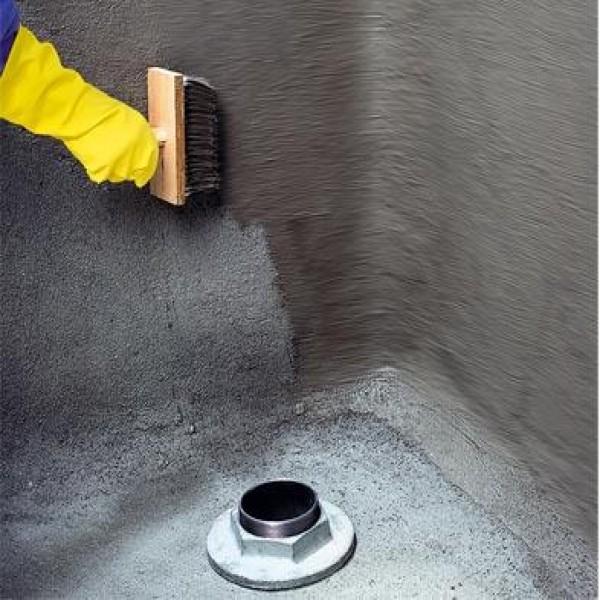
Pool leaks can be in the shell, the fittings or the plumbing. Treating the wrong one wastes money, so we always start with diagnosis.
Visual survey
We inspect the shell, tiles, coping, skimmers, lights, inlets and the main drain, and check the pump room, balance tank and surrounding areas for damp.
Dye testing
With the pump off, we release a small amount of dye near suspected cracks and fittings. If the dye is pulled into a crack or gap, we have found a leak point.
Level and isolation tests
By running the pool with the pump on and off, and with certain lines closed, we can tell whether water is escaping through the shell or the pipework.
Pipework pressure testing
Where the plumbing is suspected, lines can be pressure tested to confirm which pipe is leaking before any excavation.
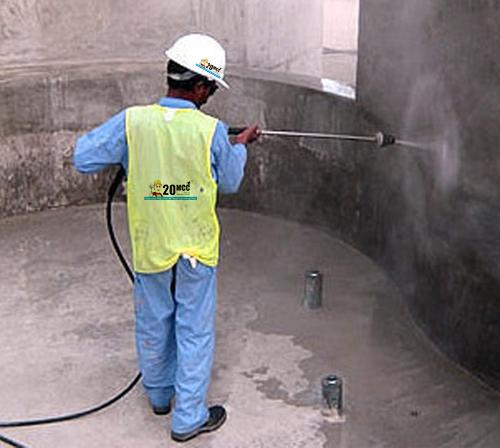
Our swimming pool waterproofing process
For a full re-waterproofing of an existing pool, or for a new pool under construction, we follow these steps.
1. Draining and drying
The pool is drained safely and allowed to dry. Old loose tiles and failed render are removed.
2. Surface preparation
The shell is cleaned by grinding or water jetting to remove laitance, algae and old coatings, so the waterproofing can bond to sound concrete.
3. Crack and joint repair
Cracks are routed out and filled with repair mortar or injected with PU or epoxy resin. Construction joints are sealed. Honeycombed or damaged concrete is repaired.
4. Sealing fittings
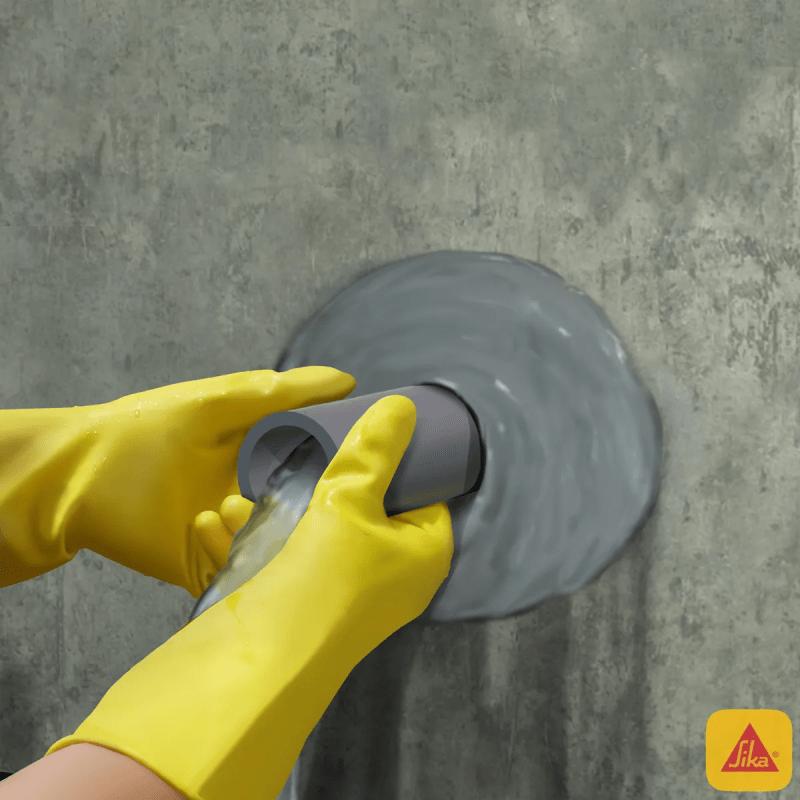
Every skimmer, light niche, inlet, main drain and pipe through the wall is sealed with special collars, sealants and reinforcing fabric, because fittings are where most pool leaks start.
5. Waterproofing membrane
We apply a pool-grade waterproofing system, usually a flexible two-part cementitious membrane or a crystalline system, in multiple coats with reinforcement at corners and joints.
6. Fill test
Before tiling, the pool is filled and the level monitored to confirm the shell is watertight.
7. Tiling with pool-grade materials
Tiles are fixed with polymer-modified, water-resistant adhesive and finished with epoxy grout that resists chemicals and staining.
What Our Customers Say.
We don't just fix leaks — we build trust. Real reviews from homeowners and businesses across Pakistan, straight from our Google Business profile.
Loading reviews from Google…
Posted on Google
 Tayyaba Mughal
Trustindex verifies that the original source of the review is Google.
Bestest waterproofing services of roofPosted on Google Husnain ButtBest waterproofing services in gulbergPosted on Google
 Zoya WasimBest roof treatmentPosted on Google
 manzoor ahmadMera ghr dha 5 hy Bht Acha kam koa hawks team ny m apny friends ko or sb jannay walon ko hawks waterproofing recommend krn ga thanks hawks teamPosted on Google
 syed rameez ashfaqExcellent servicesPosted on Google
 Abdullah KungBht achi services Hn product excellent highly recommended m ny water and heat proofing ka kam krwaya fiber sheet k sath bht Acha result hy abi spa page issue b resolve ho Gia or roof b cool hyPosted on Google
 Muhammad HamzaWork they do it really worths💯 Best Quality💯Posted on Google
 HAMZA MALIKBest heat proofing m ny roof py krwai room ka temperature normal ho gia
Repair options for an existing leaking pool
Not every leaking pool needs a full strip-out. Depending on what the inspection finds, there are several levels of repair, and we always explain the trade-off between cost, downtime and how long each option will last.
Targeted fitting repairs
When the leak is around a light niche, skimmer, return jet or main drain, we can often repair just that fitting. The surrounding tiles are removed, the fitting is cleaned back, sealed with a flexible compound and reinforcing fabric, and the area is re-tiled. This is the quickest and lowest-cost option, and it solves a large share of pool leaks.
Crack injection
Structural or shrinkage cracks in the shell can be injected with PU or epoxy resin. PU resin reacts with water and expands to fill the crack even when it is wet, which makes it useful for active leaks. Epoxy resin bonds the crack faces together and restores strength when the crack is dry and stable.
Partial re-waterproofing
If one wall or the shallow end has failed while the rest is sound, we can remove tiles from that area only, apply a membrane that laps onto the sound areas, and re-tile. This is common where a wall has settled or a construction joint has opened.
Full re-waterproofing
When tiles are falling in many places, the shell has multiple cracks or the pool has been leaking for years, a full strip and re-waterproof is the reliable choice. It also gives you the chance to update tiles, lighting and fittings at the same time.
Pool liners
For older pools where a fast renovation is needed, a PVC liner provides a complete new waterproof skin over the existing shell, with less concrete work.
How Pakistani weather affects pool waterproofing
Pools in Pakistan face conditions that are harder than in many other countries, and the waterproofing system has to be chosen with this in mind.
Extreme summer heat
In cities like Lahore, Multan, Faisalabad and Karachi, the water line and coping can get very hot in the afternoon sun, while the water itself stays cooler. This difference creates stress at the water line, which is why the top rows of tiles often fail first. We pay extra attention to the water line band with flexible adhesive and grout.
Winter cold in the north
In Islamabad, Rawalpindi, Abbottabad and Murree, night temperatures in winter can drop close to freezing. Water trapped in cracks or behind tiles can expand and push tiles off. Proper waterproofing keeps water out of these spaces.
Dust and storms
Dust storms leave fine grit that is sucked into filters and settles in grout lines, wearing them down. Regular cleaning protects the finish.
Hard and salty water
In many areas, especially parts of Karachi and southern Punjab, the water supply is hard or brackish. Mineral scale builds up on tiles and grout and can attack weaker cement products. Epoxy grout and good chemistry management help a lot here.
High groundwater
In low-lying areas and near rivers or canals, the groundwater level can be high during and after the monsoon. Pools in these areas need waterproofing that can resist pressure from outside as well as inside, which is why crystalline systems are useful.
Why homeowners rely on us
Honest advice, quality materials and clean work — on every single project.
Quality Service
We deliver reliable waterproofing solutions for long-lasting protection.
Skilled Team
Our team focuses on effective swimming pool waterproofing work and protection.
Quick Response
We respond promptly to your swimming pool waterproofing service inquiries.
Fair Pricing
We help customers explore suitable waterproofing options within budgets.
Leak Prevention
Our solutions help reduce water penetration and moisture damage.
Roof Protection
We help protect residential and commercial roofs from leakage.
Safe draining and refilling of your pool
Draining a pool sounds simple, but done wrongly it can damage the shell. These are the precautions we follow on every project.
- Check groundwater first. If the groundwater level is high, an empty pool can float or crack from the pressure underneath. We check conditions and, where needed, use hydrostatic relief valves.
- Drain to the right place. Chlorinated pool water should not be dumped onto lawns or into places where it can harm plants or neighbours. We plan the discharge route with you.
- Keep the shell from overheating. In summer, an empty pool can crack in the sun. We work quickly and keep surfaces damp or shaded where required.
- Refill steadily. Filling in stages lets the shell and new materials take the load gradually, and lets us watch for any problems.
- Balance the chemistry slowly. New cement-based materials can affect water chemistry in the first weeks. We give you guidance on start-up chemistry to protect the new grout and finish.
Pool waterproofing has to handle permanent water pressure, chemicals and, for rooftop pools, structural movement. These are the systems we use.
| System | Where it works best | Advantages |
|---|---|---|
| Flexible cementitious membrane | Most residential and hotel pools under tiles | Strong bond to concrete, handles hairline movement, compatible with tile adhesive |
| Crystalline waterproofing | New concrete pools, underground shells | Penetrates concrete pores and seals from within, works against water from either side |
| Polyurethane or polyurea coating | Rooftop pools, pools with structural movement | Highly elastic, seamless, bridges cracks |
| PVC pool liner | Older pools needing a fast renovation | Complete waterproof skin, quick to install |
| Epoxy grout | All tiled pools | Chemical resistant, low absorption, reduces algae and staining |
See our swimming pool membrane waterproofing, cementitious membrane and PVC membrane pages for more detail on each system.
Leaking roof or a hot top floor? Let's fix it.
Book a free inspection today. Our expert will visit, find the cause and suggest the right solution.
Waterproofing for every kind of pool
Residential pools in houses and farmhouses
Private pools in DHA, Bahria Town, Gulberg, F and E sectors and farmhouses around Lahore and Islamabad are often used heavily in summer and left alone in winter. We plan work in the off season so the pool is ready by April.
Rooftop pools
A rooftop pool sits over living space, so even a small leak causes serious damage below. These pools need flexible membranes, careful detailing and often a second barrier under the pool slab. We treat them as a structural priority.
Hotel and club pools
Commercial pools run long hours, use more chemicals and have strict downtime limits. We schedule work to the shortest practical window and use systems that cure quickly.
School, university and sports complex pools
Large public pools have bigger shells, more joints and heavy use. We work in phases and provide written maintenance guidance for the facilities team.
Fountains, ponds and water features
The same principles apply to decorative fountains, koi ponds and water features, which often leak through joints and pipe entries.
If you are building a new pool, waterproofing should be planned from the first day, not added at the end. Getting it right during construction costs far less than repairing a leaking pool later.
Concrete quality and design
A pool shell should be designed by a structural engineer with the right thickness, steel and concrete grade. Dense, well-compacted concrete with a proper water-cement ratio leaks far less.
Waterstops at construction joints
Where the floor meets the walls, or where concrete is poured in stages, PVC or hydrophilic waterstops should be cast into the joint. These are almost impossible to add later.
Puddle flanges on pipes
Pipes that pass through the pool wall should have puddle flanges cast into the concrete, so water cannot travel along the outside of the pipe.
Crystalline admixtures
A crystalline waterproofing admixture in the concrete mix makes the shell itself more resistant to water.
Membrane before tiling
Once the shell has cured, a flexible membrane is applied, tested and then tiled. We can work with your contractor or architect from the design stage to make sure each of these layers is included.
Protecting the pool deck, balance tank and pump room
A pool is more than its shell. Water also escapes through the areas around it, and these need waterproofing too.
Pool deck and coping
Splash water and rain on the pool deck soak into the joint between the coping and the shell. Over time this opens a gap behind the top row of tiles. We seal coping joints with flexible sealant and slope the deck away from the pool.
Balance tanks
Overflow pools use a balance tank that is often built below ground. These tanks leak just like water tanks and are frequently forgotten. We treat them with the same care as the pool shell. See our underground water tank waterproofing service.
Pump and filter rooms
Pump rooms are usually below the pool level and collect any water that leaks from fittings. We waterproof the walls and floor and add a sump where needed.
Basements next to the pool
If your basement shares a wall with the pool, damp on that wall is a sign of shell leakage. We can treat the basement side with negative-side waterproofing as well. Learn more on our basement waterproofing page.
Pool care tips to protect the waterproofing
- Keep the water chemistry balanced. Low pH water is aggressive to grout and cement-based materials. Test regularly and keep pH in the recommended range.
- Avoid leaving the pool empty for long. An empty pool in the Pakistani summer sun dries and cracks. If the pool must be drained, keep the shell shaded or damp and refill as soon as possible.
- Do not drain during high groundwater. In areas with high water tables, an empty pool can be pushed up by groundwater pressure. Always ask before draining.
- Replace damaged grout early. Small grout gaps grow quickly under chlorinated water.
- Check the water level weekly. A sudden change is the first sign of a new leak.
- Service fittings such as lights and skimmers regularly, and reseal them when replaced.
We offer an off-season inspection for residential and commercial pools to catch problems before summer.
What affects the cost of pool waterproofing
We price pool work after a free inspection, because the scope varies a lot. The main factors are:
- Size and depth of the pool, which decide the total treated area.
- Tile removal. Stripping old tiles and render adds significant labour.
- Condition of the shell, including the number of cracks and areas of weak concrete.
- Number of fittings such as lights, jets, skimmers and drains to be sealed.
- System chosen, from cementitious membranes to PU or PVC liners.
- Re-tiling and epoxy grout, which are quoted separately.
- Location, for example rooftop pools needing material lifting.
Your written quote explains each item and the warranty, so you can plan with confidence.
Why choose Waterproofing Hawks for your pool
- Diagnosis before treatment. We confirm whether the leak is in the shell, fittings or pipework.
- Pool-grade materials only. Systems designed for permanent water pressure and pool chemicals.
- Fittings sealed properly. Lights, skimmers and drains get special attention because that is where most leaks are.
- Fill testing before tiling. We confirm the shell holds water before finishing.
- Written warranty and clear quote. No hidden extras.
Call or WhatsApp 0321-4156036 or book a free pool inspection.
Related services you may need
Water and heat problems rarely come alone. These related services are often done together with swimming pool waterproofing.
Questions about Swimming Pool Waterproofing
Answers to the questions customers ask us most about swimming pool waterproofing.
0321-4156036
How much water loss is normal for a swimming pool?
Some loss from evaporation is normal, especially in hot, windy weather. A steady drop of more than a few millimetres a day in normal conditions, or a clear difference in the bucket test, usually means a leak.
Can you fix a leaking pool without draining it?
Some small leaks around fittings can be sealed underwater with special putties. For cracks in the shell, falling tiles or a full re-waterproofing, the pool must be drained.
How long does pool waterproofing take?
Small repairs can take two to four days. A full strip, re-waterproof and re-tile usually takes two to four weeks depending on size and curing times.
Which waterproofing is best for a swimming pool?
For most tiled concrete pools a flexible cementitious membrane with epoxy grout works very well. Rooftop pools and pools with movement benefit from PU or polyurea systems. We recommend after inspection.
Why do tiles keep falling off my pool walls?
Usually because water has got behind the tiles through eroded grout, and the adhesive was not suitable for permanent immersion. The fix is to remove loose tiles, waterproof, and re-tile with pool-grade adhesive and epoxy grout.
Can a rooftop pool be waterproofed safely?
Yes, but it needs careful design. We use flexible membranes, seal every fitting and often add a secondary barrier under the pool to protect the rooms below.
Do you also waterproof fountains and ponds?
Yes. We waterproof fountains, koi ponds, water features and balance tanks using the same pool-grade systems.
Do you provide a warranty?
Yes. Full pool waterproofing comes with a written warranty, stated in your quote.
Will waterproofing change the look of my pool?
The waterproofing layer sits under the tiles, so the finished pool looks the same or better. Many clients use the project to update tiles, mosaic bands or lighting at the same time.
When is the best time to waterproof a pool in Pakistan?
The best time is in the cooler, drier months between October and March, so the pool is ready for summer. Commercial pools can be scheduled for their quietest period.
Can you work with my architect or pool contractor?
Yes. For new pools we can join at the design stage to advise on waterstops, puddle flanges and the membrane system, and then carry out the waterproofing before tiling.
Latest tips & guides
Practical advice to help you protect your home from leakage and heat.